BLAZEJ
ARTISAN TILE CO.
THE CRAFTSMAN
ARTISAN TILE CO.
THE CRAFTSMAN
NO CTRL+Z
NO BOOTCAMP
KENSHOTEK · ON COMPUTE
NO BOOTCAMP
KENSHOTEK · ON COMPUTE
The Bay Area has 400,000 software engineers. It has 8,000 licensed tile setters. One of these groups cannot fix a leaky pipe. The other built the house the pipe is in. In one decade this gets worse. In two decades it becomes structural.
Dev bros came from everywhere. The Indian H-1B wave came in phases — the dot-com boom, the 2010s scale-up, the 2020s AI hiring surge. They built the software layer. Incredible volume of output. The Valley runs on that labor. Full credit where it is due.
But the question nobody is asking at the all-hands: when the foundation shifts, when the pipe corrodes, when the tile work needs replacing in the $4.2M Palo Alto split-level — who shows up? It is not the bootcamp cohort. It is not the H-1B wave. They were never coming for those jobs. The visa was not designed for that. The system filtered it out by design.
And now the Bay Area cannot find a plumber who answers the phone before Thursday.
This is not a roast. This is a skill inventory. The dev bro has a real and valuable stack. The following items are simply not on it:
The H-1B visa requires employer sponsorship for specialty occupations — defined as roles requiring at least a bachelor's degree in a specific field. Tile setting. Plumbing. Concrete work. Framing. These are not specialty occupations under H-1B definition. They require apprenticeships, not degrees. They cannot be sponsored.
The Indian immigration wave to the Bay was not coming for trades work. That is not a criticism — it is a structural observation. The visa architecture made one type of skilled immigration extremely accessible and another type nearly impossible. A decade of that policy has produced a zip code with the highest median income in the country that cannot staff a tile job without a three-month wait list.
Meanwhile, the trades pipeline that did exist — multi-generational American trade families, Eastern European master craftsmen, Latin American construction workers — is aging out. By 2030, 40% of the current construction workforce hits retirement age. Nobody is coming up behind them at the required volume.
There is a different kind of compute running in the trades. It is spatial. It is tactile. It runs on years of pattern recognition built through repetition, error, correction, and mastery — not gradient descent, not token prediction, not a fine-tuned model. The master craftsman is doing inference on irregular surfaces in real-time with no undo button and a client standing three feet behind him asking when it will be done.
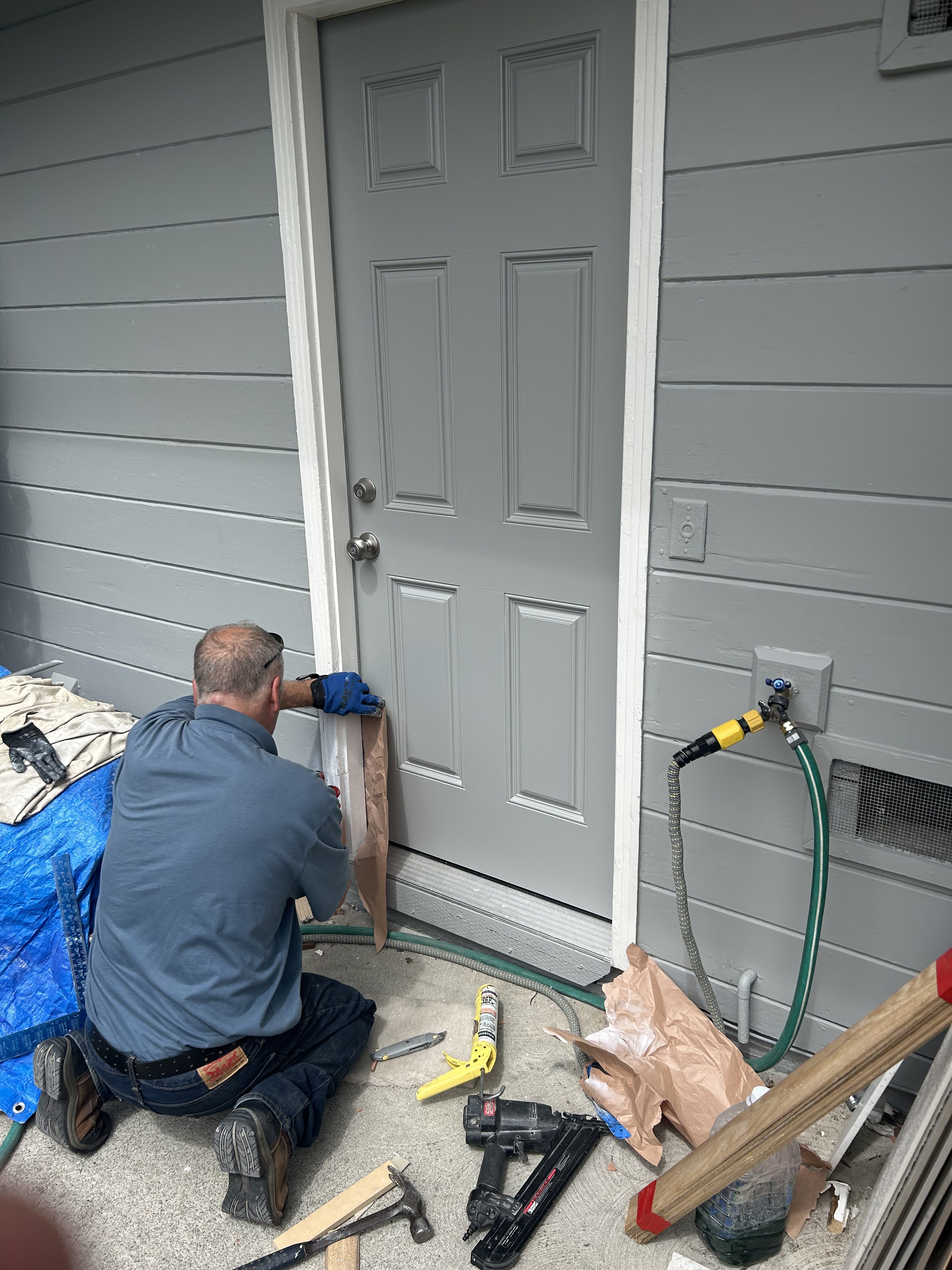
Blazej has been doing that compute for decades. Artisan Tile Co. The eye that reads the wall before the level touches it. The hand that sets the first tile and knows where the last one lands. This is not a vibe. This is seven to ten years of training that no bootcamp offers and no H-1B visa covers.
KenshoTek tracks both stacks. The silicon layer and the physical layer. One compiles. One sets. One can be replicated by a language model. The other one cannot.
Software jobs are automating toward AI assistance — Copilot, Cursor, Claude. The junior developer role is compressing. The senior developer role is extending via AI leverage. The 400,000 Bay Area software engineers will be doing more with fewer people within five years. AI is already in the stack.
Tile work cannot be automated. Irregular substrates. Human judgment on color variation. Real-time adjustment for walls that are never perfectly plumb. The tile robot does not exist at production scale for residential work. It will not exist in a decade at the price point that makes sense. The master tile setter is not being replaced by Copilot.
The shortage gets worse. The retirement wave arrives. The training pipeline remains thin. The Bay Area — which spent twenty years optimizing for one type of skilled worker — will spend the next twenty learning that the building they optimized in still needs a craftsman when the grout cracks.