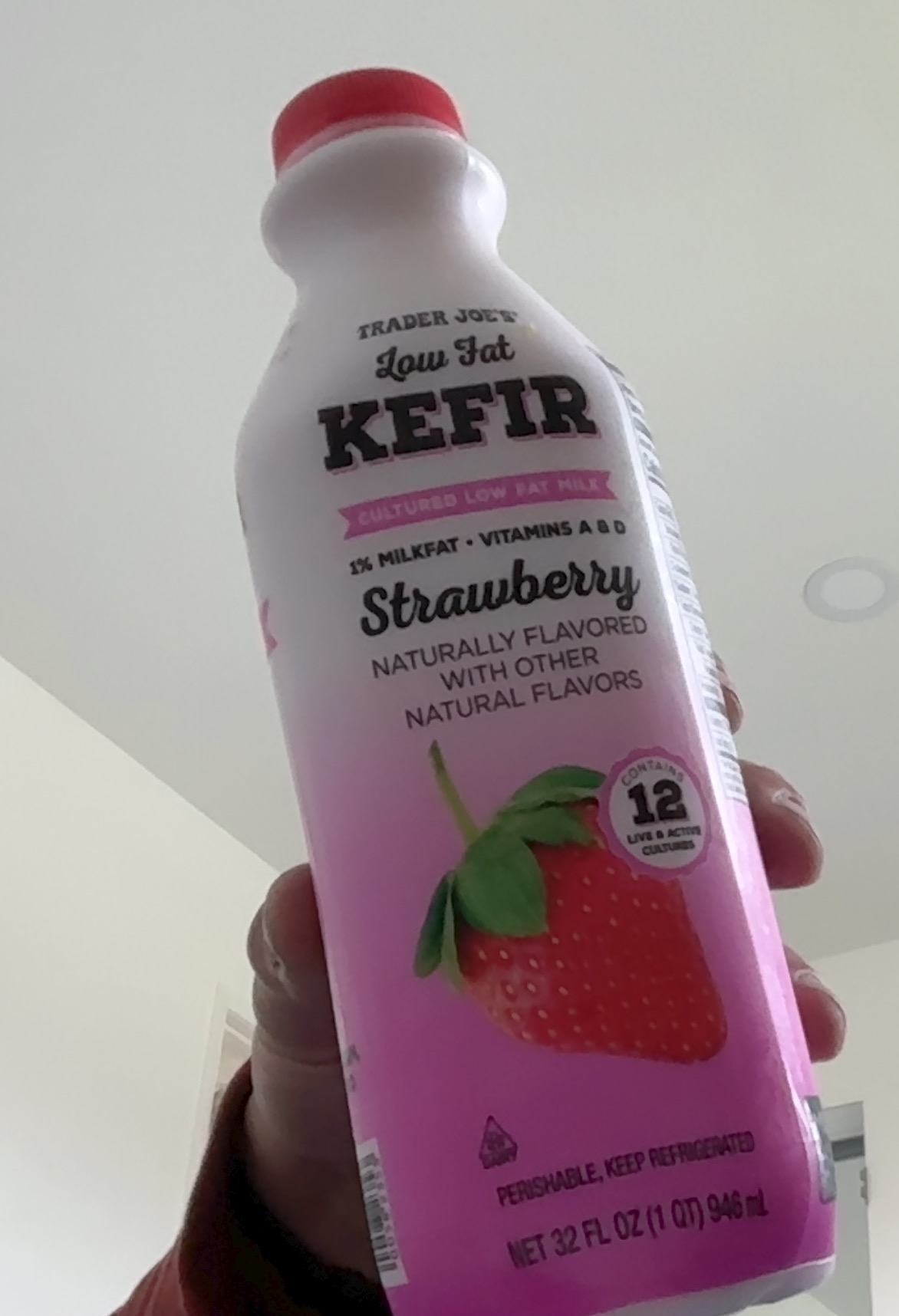
Trader Joe's strawberry kefir. 12 live and active cultures. 32 fl oz. $3.49. The most nutritionally dense thing on the shelf per dollar. This is not a review. This is a biology lesson.
Kefir is fermented milk. Not yogurt. Not a smoothie. Fermented milk — originated in the Caucasus mountains, used for over 2,000 years. The word comes from Turkish/Caucasian roots meaning "good feeling." It is produced by kefir grains: a symbiotic colony of bacteria and yeast (SCOBY) that colonizes the milk, consumes the lactose, and produces a living culture matrix.
It is not a probiotic supplement. It is food that is alive. That distinction matters.
Each strain performs a distinct function in the gut ecosystem. This is not one organism doing one job. This is a civilization:
The vagus nerve is a direct highway from the gut to the brain. It transmits signals bidirectionally — but 80% of the fibers run gut-to-brain, not brain-to-gut. The gut talks more than it listens.
The enteric nervous system (ENS) contains approximately 100 million neurons — more than the spinal cord. It operates semi-autonomously. When researchers sever the vagus nerve in animal studies, gut bacteria still affect behavior through other channels: bloodstream metabolites, immune cytokines, direct neurotransmitter synthesis.
90% of the body's serotonin is produced in the gut, not the brain. The enterochromaffin cells in the gut lining — stimulated by healthy microbiota — are the primary serotonin factory. Low gut diversity correlates directly with low serotonin output. Depression research is increasingly gut research.
Most nutrition information talks about what a food contains. The better question is what the gut can actually absorb. These are not the same number. A calcium supplement with poor gut flora delivers a fraction of its label claim. Kefir delivers more calcium per serving than the label suggests, because the fermentation process pre-digests the proteins and lactose — the microbial work is already done before consumption.
Lactose intolerant individuals can typically drink kefir without symptoms. The approximately 99% lactose reduction via fermentation makes it accessible where raw milk is not.
| Kefir | Yogurt | |
|---|---|---|
| Live Cultures | 12+ strains | 2–3 strains |
| Lactose | ~99% broken down | ~40–50% broken down |
| Colonization | Transient + colonizing strains | Transient only |
| Yeast | Present (beneficial) | Absent |
| Fermentation time | 24–48 hrs (grain-based) | 4–8 hrs (starter culture) |
| Protein delivery | Pre-digested, higher absorption | Standard absorption |
| Price point (TJ's) | $3.49 / 32 oz | $2–4 / 32 oz |
Natural fruit polyphenols are prebiotic compounds — they are not digested by the human body but selectively fermented by gut microbiota. Strawberry polyphenols (anthocyanins, ellagitannins, quercetin) function as fuel for the exact cultures already in the kefir bottle. You are drinking a self-feeding ecosystem. The fruit feeds the organisms. The organisms produce nutrients. The nutrients reach the vagus nerve. The nerve informs the brain.
This is called a synbiotic effect — probiotic (live cultures) + prebiotic (food for those cultures) in the same product. The strawberry is doing work.