◈ KENSHO INVESTIGATES · DISPATCH · RECEIPTS ON FILE
BURT'S
BEES.
◈ THE MAN · THE BUYOUT · THE SALE · THE TIN · THE TRUTH
LEOTEKJKX + SCORPTEKXII + AQUATEKXVI · KENSHO 20/20 · FILED · 925
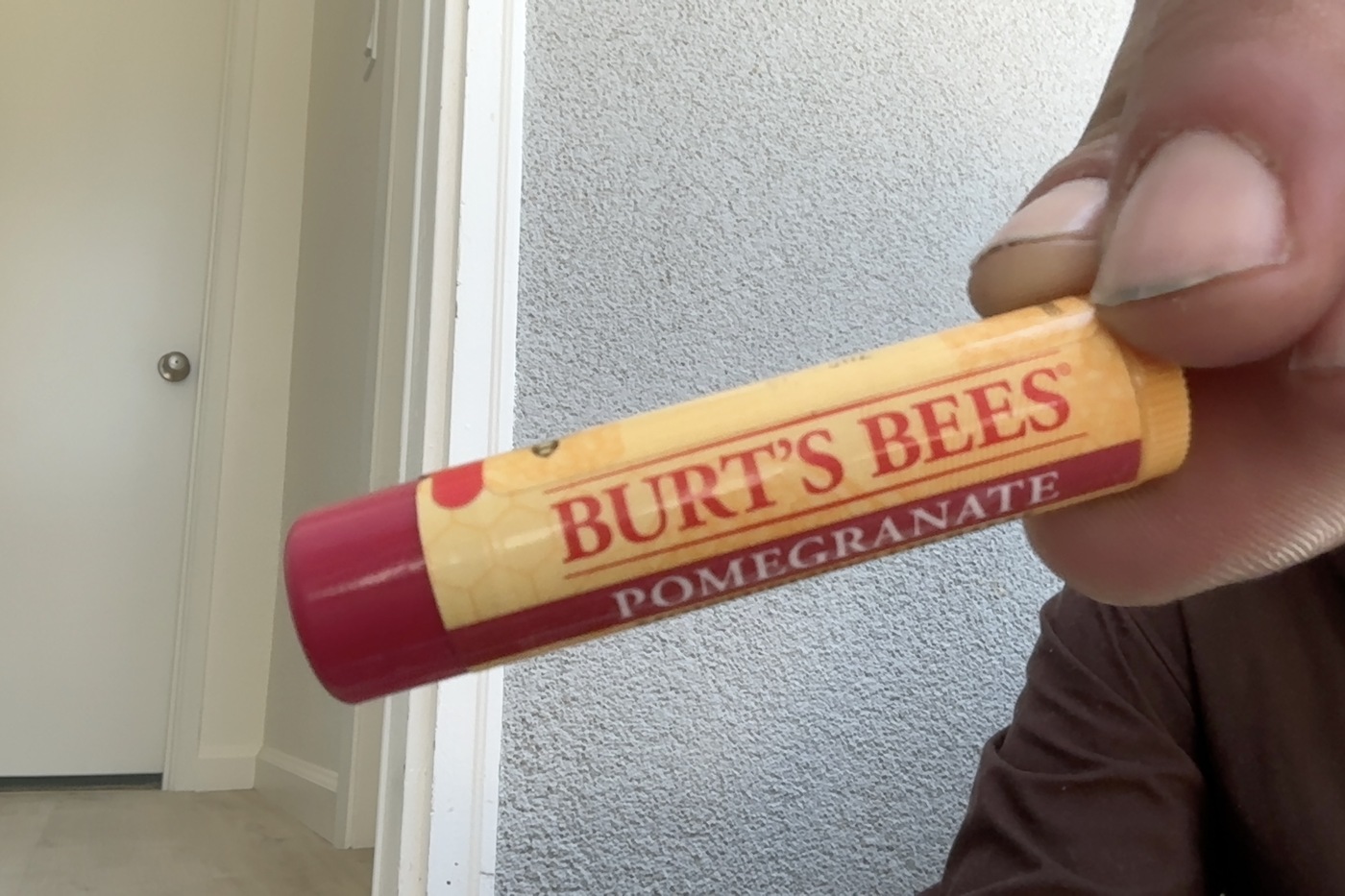
Burt Shavitz was a beekeeper and former photojournalist who lived in a converted turkey coop in rural Maine with no running water. He gave a hitchhiker named Roxanne Quimby a ride. They started a company. Burt sold his stake for $130,000. The company sold to Clorox for $925 million. His face is still on every tin.
◈ THE NUMBERS · WHAT THE TIN DOESN'T SAY
$130K
BURT'S BUYOUT
HIS ENTIRE STAKE · 1999
$925M
CLOROX ACQUISITION
2007 · FULL COMPANY
$0
BURT'S SHARE OF SALE
ALREADY BOUGHT OUT
2015
BURT SHAVITZ DIES
MAINE · AGE 80 · TURKEY COOP
◈ THE TIMELINE · FROM HITCHHIKER TO CLOROX
1973
Burt Shavitz moves to Maine. Former New York photojournalist. Photographed Malcolm X, covered civil rights. Decides that is enough of that. Buys land in Guilford, Maine. Keeps bees. Sells honey from a converted turkey coop with no running water. This is not a brand story yet. This is a man who decided.
1984
Roxanne Quimby hitchhikes into Burt's truck. She is 33, recently divorced, broke, living in Maine with two children. Burt gives her a ride. They start a relationship. She starts helping sell honey at farmers markets. She notices he has enormous quantities of beeswax with no use for it. She sees the inventory. She sees the business.
1987
First product: candles. Roxanne melts beeswax into candles using an old recipe from a 1903 almanac. They sell at craft fairs from Burt's truck. First year revenue: $81,000. The brand name: Burt's Bees. The face: Burt. The engine: Roxanne. This division of labor holds for the entire run of the company.
1991
The lip balm. Roxanne formulates a beeswax lip balm. It becomes the core product. The tin with Burt's face. The product that still moves millions of units per year. The formula is simple. The packaging is honest. The brand proposition is "natural" — and in 1991, natural is not a crowded space. They are early.
1993
Company moves to North Carolina. Burt doesn't. As the company grows, Roxanne relocates operations to Durham, NC for manufacturing scale. Burt stays in Maine. The distance between them — personal and geographic — grows. He is the face. She is running the operation. The partnership is functional but increasingly unequal in terms of involvement.
1999
Roxanne buys Burt out. $130,000. Burt's 49% stake in the company he is literally the face of. $130,000. The company was doing approximately $8 million in revenue at this point. Burt accepts. He has always been more interested in the bees than the business. He returns to Maine. He never speaks publicly about whether $130,000 was fair.
2003
AEA Investors acquires majority stake. Roxanne sells a controlling interest to private equity for approximately $177 million — valuing the company at over $175M. The company that bought Burt's stake for $130K four years earlier is now worth $175M+. The natural beauty market has exploded. The timing of the buyout is now visible in full.
2007
Clorox acquires Burt's Bees for $925 million. Clorox. The company that makes bleach. The disinfectant. The product that kills living things. They pay $925 million for a brand whose entire proposition is natural, gentle, from the earth. The man on the tin lived in a turkey coop with no running water. The company on the tin makes Liquid-Plumr and Pine-Sol.
2013
"Burt's Buzz" documentary releases. Director Jody Shapiro follows Burt Shavitz on promotional tours for the brand — a brand he no longer owns, has no stake in, and did not build beyond its origin. Burt appears bewildered by the scale of what his name and face have become. He talks about the bees. He talks about Maine. He is not bitter on camera. He is simply somewhere else in his head.
2015
Burt Shavitz dies. Age 80. Guilford, Maine. Surrounded by the land he bought in 1973. His ashes were spread in Maine. The tin continues to sell. The face continues to move units. Clorox reports Burt's Bees as a growth brand in its portfolio. The turkey coop is still there.
◈ THE RECEIPTS · THE DEAL IN CONTEXT
◈ THE BUYOUT MATH
1999: Burt's 49% stake purchased for $130,000.
1999: Company revenue approximately $8 million.
At $8M revenue, a 49% stake at $130K implies a company valuation of roughly $265K — about 3% of annual revenue. Revenue multiples for consumer goods companies typically range from 1-3× revenue. A fair value for 49% of an $8M revenue company would be $4-12M depending on growth trajectory. The company was growing fast. The trajectory was visible.
2003: 80% of the company sells for $177M — roughly 20× revenue by then.
The question is not whether Roxanne was a genius. She was. The question is whether $130,000 was a fair exchange for 49% of what she knew she was building.
◈ THE CLOROX ACQUISITION · WHAT "NATURAL" COSTS
Clorox paid $925 million for Burt's Bees in 2007. At the time, Burt's Bees had approximately $170 million in annual revenue. That is a 5.4× revenue multiple. Clorox was not buying a product. Clorox was buying a story. The "natural" brand narrative, the face, the origin myth — the beekeeper in Maine, the hitchhiker, the turkey coop — was worth 5.4× revenue. Remove the story and you have a lip balm company. With the story, you have $925 million.
The man whose face and story generated that premium received $130,000 in 1999 and zero in 2007. The story was the asset. The asset belonged to everyone who bought it legally. The man who was the story was no longer on the cap table.
◈ THE IRONY · DOCUMENTED · UNAVOIDABLE
Burt's Bees markets itself on naturalness. The ingredients. The beeswax. The peppermint. The absence of parabens and petrochemicals. The ethos of the man on the tin — a man who lived off the land, kept bees, avoided the commercial world as much as possible.
The parent company also manufactures:
Clorox Bleach. Formula 409. Liquid-Plumr. Pine-Sol. Tilex. Fresh Step cat litter. Glad trash bags.
The "natural" brand is a product line inside a chemical company's portfolio. The brand separation is real — Clorox manages Burt's Bees as an independent brand identity. But the revenue goes to the same place. When you buy the lip balm for its naturalness, the dollar goes to Clorox. This is not a conspiracy. It is a legal acquisition. It is also exactly what it looks like.
◈ BURT · THE MAN HIMSELF
◈ THE UNBOTHERED GENIUS · LEOTEKJKX PRESIDES
Watch the documentary. Burt's Buzz, 2013. They take Burt on a promotional tour — airports, cities, appearances, press junkets — for a brand that has been his in name only for over a decade. He is 80 years old. He has a beard that has been growing since before most of the marketing team was born. He is doing the tour because they asked. He is clearly thinking about his bees.
At one point someone asks him what he thinks of how big the company has gotten. He sort of shrugs. He talks about the bees. He mentions something about the land in Maine.
This is not senility. This is the highest IQ position in the room.
Burt Shavitz understood something that the entire consumer goods industry does not: he knew exactly what he wanted. He wanted the turkey coop. He wanted the bees. He wanted Maine winters and honey and silence. He never wanted the company. When the company became something else, he took the money — $130,000, fine, whatever — and went back to the only thing he was ever doing it for.
The people calling that a bad deal are doing it from open offices in Durham and Cincinnati. Burt was doing it from 37 acres in Guilford with no running water and a hive he loved.
Birds == Burt's. He was always a free thing. You cannot cage a free thing and call the cage a loss. He left. He was already home. He died in Maine surrounded by bees and land. The brand that bears his face is worth a billion dollars and Clorox owns it.
He won. He just won at a game nobody else understood he was playing.
◈ THE PATTERN · ORIGIN MYTH AS COMMODITY
The Burt's Bees story is not unique. It is a specific type of acquisition play that has become standard in consumer goods: buy the authenticity, keep the story, scale the product, and let the origin myth do the brand work indefinitely. The founder becomes the logo. The logo sells the product. The product belongs to the acquirer.
Ben & Jerry's: sold to Unilever in 2000 for $326 million. Ben and Jerry have spent years fighting Unilever publicly over the brand's stated social mission — most recently over ice cream sales in Israel. The co-founders are still present, still vocal, still connected to the values that built the brand. Unilever still owns it. The tension is structural and permanent.
Honest Tea: founded by Seth Goldman with a commitment to organic, fair-trade tea. Acquired by Coca-Cola (first a stake in 2008, full acquisition in 2011). Discontinued in 2022 when Coke determined the margins did not justify the shelf space. The brand that built itself on honesty was ended by a revenue calculation.
The pattern: authentic origin, acquisition by scale, brand maintained, founder sidelined or bought out, mission becomes marketing. The product does not change. The story becomes the product. When the story stops generating sufficient return, the product is discontinued. The story was always the asset. The asset is always extractable.
◈ THE VERDICT · LEOTEKJKX + SCORPTEKXII PRESIDING
THE MAN ON THE TIN SOLD FOR $130,000.
THE TIN SOLD TO CLOROX FOR $925 MILLION.
THE BEES NEVER CHANGED.
THE CAP TABLE DID.
HIS FACE IS STILL ON IT. FILED. 925.
◈ FINAL NOTE · SCORPTEKXII
Never trust a man with perfect nails.
Burt's nails were not perfect. Burt's nails were the nails of a man who kept bees and fixed fences and loaded trucks and lived. Every executive who bought and sold his name had perfect nails. Every boardroom that decided the brand's future had perfect nails. The man on the tin did not have perfect nails. That is the only credential that matters in this story.